

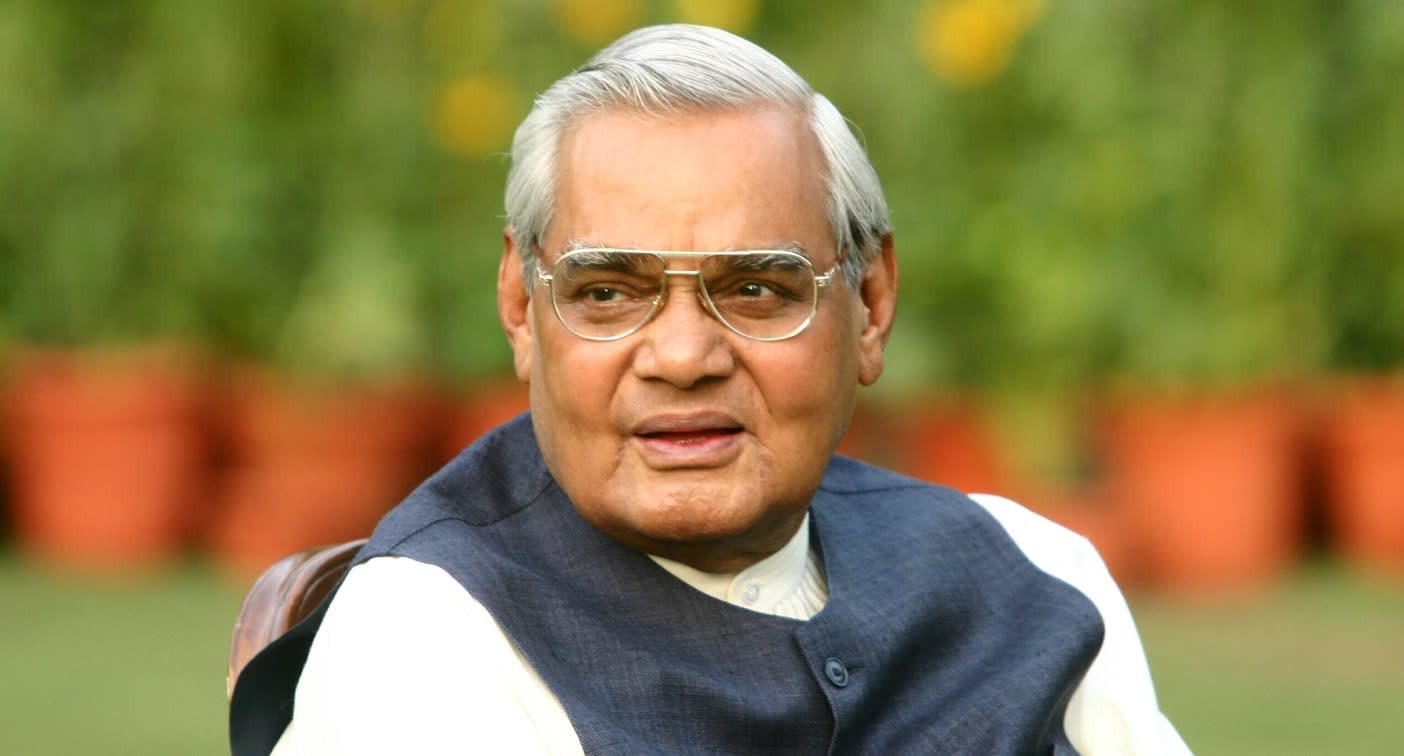
Five Landmark Economic Decisions Taken During Atal Bihari Vajpayee’s Tenure
Atal Bihari Vajpayee is widely regarded as one of the most visionary leaders in India’s modern history. His farsighted and courageous decisions not only strengthened the country’s economic foundation but also elevated India’s standing on the global stage. Several landmark reforms and initiatives undertaken during his tenure continue to shape India’s development even today.
Golden Quadrilateral Highway Project: One of Vajpayee’s most ambitious and transformative initiatives was the Golden Quadrilateral Highway Project. With a vision to seamlessly connect India’s North, South, East, and West, the project involved the construction of 5,846 kilometers of four- and six-lane highways. These roads linked major metropolitan cities such as Delhi, Mumbai, Chennai, Kolkata, and Bengaluru, along with important industrial and economic centers like Ahmedabad, Jaipur, Vijayawada, Visakhapatnam, and Cuttack. The project revolutionized road transport, boosted trade and industrial growth, reduced travel time, and enabled businesses to access new markets more efficiently.
Reforms in the Telecommunications Sector: Atal Bihari Vajpayee is often referred to as the father of modern Indian telecommunications. His government introduced the National Telecom Policy in 1999, which opened the sector to private participation and ended the government monopoly. This policy attracted large-scale investments, dramatically reduced call rates, improved service quality, and expanded telecom connectivity across the country, making communication affordable and accessible to millions.
Fiscal Responsibility and Budget Management (FRBM) Act, 2003: To ensure fiscal discipline and long-term economic stability, the Vajpayee government enacted the Fiscal Responsibility and Budget Management (FRBM) Act in 2003. The objective of this legislation was to limit India’s fiscal deficit to 3% of GDP, enhance transparency in public finances, and enforce greater accountability in government spending. The Act laid the foundation for responsible financial governance.
Privatization of Public Sector Undertakings (PSUs): Privatization emerged as a key economic reform during Vajpayee’s tenure from 1999 to 2004. While the process began in the early 1990s, Vajpayee’s government gave it strong momentum. Major PSUs such as Maruti Udyog, Bharat Aluminium, Hindustan Zinc, Indian Petrochemicals, and Modern Food Industries were privatized. A dedicated ministry led by Arun Shourie was established to oversee the disinvestment process, making this period one of the most significant phases of privatization in India.
Deregulation of Fuel Prices: For decades, petroleum prices in India were regulated under the Administered Price Mechanism (APM). In 2002, the Vajpayee government abolished the APM and initiated fuel price reforms. This move gradually led to market-based pricing, with petrol fully deregulated in 2010 and diesel in 2014. The reform increased transparency, reduced fiscal pressure, and aligned domestic fuel prices with global market trends.