
PM Modi on How 2025 Reforms Reshaped India
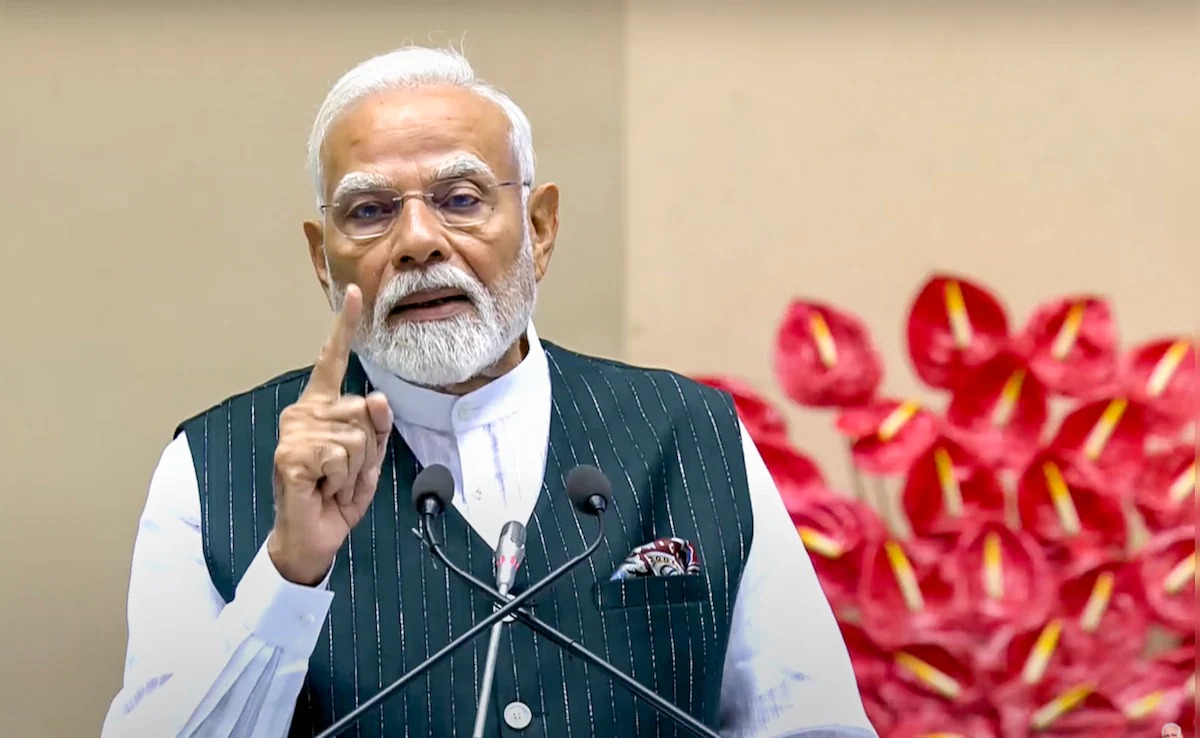
Prime Minister Narendra Modi shared a post on LinkedIn on Tuesday, describing 2025 as the “Year of Reforms.” In the post, he outlined the wide-ranging reforms were implemented across various sectors during the year, and urged investors to place their trust in India and invest in its people. He stated that India has emerged as a major focus of global attention, driven by the innovative spirit of its citizens. PM Modi noted that the world now looks at India with hope and confidence and values this forward-looking approach.
Prime Minister Narendra Modi said India has “boarded the Reform Express,” driven by the country’s youth, strong demography, and the courage of its people. 2025 will be remembered as a year when reforms became a sustained national mission, focused on modernising institutions, simplifying governance, and strengthening the foundation for long-term and inclusive growth, said the PM.
Major GST reforms introduced a simple two-slab tax structure of 5% and 18%, reducing the burden on households, MSMEs, farmers, and labour-intensive sectors, improving compliance, and boosting consumer demand.
The government provided unprecedented relief to the middle class, with no income tax for individuals earning up to ₹12 lakh annually, and replaced the Income Tax Act, 1961, with the simplified Income Tax Act, 2025.
To support businesses, the definition of small companies was expanded to include firms with a turnover of up to ₹100 crore, thereby reducing compliance costs. 100% FDI was allowed in the insurance sector to improve access, competition, and service quality.
In financial markets, the Securities Markets Code Bill was introduced to strengthen governance, protect investors, and enable technology-driven markets.
Key maritime and blue economy reforms replaced outdated colonial-era laws, simplified documentation, and reduced logistics costs.
Hundreds of outdated laws were repealed to end criminalisation and improve ease of doing business, including the removal and suspension of multiple quality control orders across industries.
Historic labour reforms merged 29 laws into four modern codes, ensuring worker protection, fair wages, social security, women’s participation, and wider coverage for unorganised workers.
India expanded its global trade footprint through new trade agreements with several countries, strengthening its position as a reliable global partner.
The nuclear energy reform through the Peace Act strengthened India’s clean energy framework, supporting future technologies, industrial growth and private participation.
A landmark step was also taken in rural employment, enhancing the employment guarantee scheme to support rural livelihoods.